Friday, October 3, 2025


 About me:

I hold a Master's degree in Development Management (with a focus on Livelihood) from the Netherlands. Additionally, I completed a Post Graduate Diploma (PGD) in Disaster Management from the Open University. Additionally, I have completed professional development courses in Indigenous Studies, including "Indigenous Canada" and "Arctic Peoples and Cultures" at the University of Alberta, as well as "Aboriginal Worldviews and Education" at the University of Toronto.

I am a professional development worker for both Humanitarian and Regular development sets. With over 15 years of global humanitarian leadership across the Red Cross and INGOs in Asia, the Middle East, Africa, and North America, I bring extensive expertise in program management, livelihoods, and cash-based interventions. My approach is grounded in eight years of grassroots experience, ensuring strategies are community-informed. I have proven experience designing and managing market-based economic development programs. 

I specialize in Local Economic Development (LED), value chain strengthening, and employment creation through MSME support, TVET, and access to finance. I am skilled in labor market analysis, financial ecosystem mapping, and public-private dialogue to foster inclusive growth. I have a proven ability to coordinate multi-stakeholder partnerships, integrate climate resilience, and ensure donor compliance. I have delivered impactful livelihood and recovery interventions in post-conflict and refugee settings, enhancing entrepreneurship and investment environmentsemergency livelihood responses; food security; a cash transfer program (CVA/CTP level II); and vocational training in the operational sector.  I possess strong team spirit and am adaptable, competent, and work-motivated.

In the Canadian context, I am now applying my transferable competencies as a member of the Canadian Red Cross Emergency Response Team (ERT-L3). In this role, I have served as an on-call emergency responder for major domestic operations, including providing flood and fire response support to Ontario's First Nations communities and participating in the Manitoba wildlife response. My responsibilities have focused on frontline community engagement, emergency mobilization, and supporting capacity-building initiatives, directly aligning my international experience with local needs.

LinkedInhttps://www.linkedin.com/in/chiranjibirijal/

Thursday, March 23, 2023

Happiness, resilience, support, respect, and localization - Cash transfer programming (CTP)- sorts of activities – through conditional cash grant (CCG)


Chiranjibi, Sittwe, Rakhine, Myanmar -23 March 2023. 

When I am formulating the title of this blog post, I am thinking about my own happiness (!), I am remembering a few days ago world happiness day, my country's rank is 84, and where I am working is 126. The ranks are focused on different indicators, I am looking to my work and local context with the team, and how we could contribute the bricks of happiness in the individual household, people, and their families. 

Cash disbursement for 504 households with conditional cash grant (CCG) @ 300,000 MMK ($143) divided into two installments since the team ware waiting to support small businesses and livelihood for targeted households.

Cash-based interventions transfer resources to the targeted people in two main ways – by providing them directly with cash or by giving them vouchers. As an above intervention, we did all cash-only modes of disbursement where individual cash as physical and community/group cash through the bank transfer. The concern – is how our preparedness, building ownership, and monitoring mechanism work in the context. Red Cross has been using Community Engagement and Accountability (CEA) approaches as an instrumental tool. Targeted communities used the supported grant to get their own choice of small business to invest as a starter fund, in the local market and it gave them a chance to save time – our approaches have been ensuring beneficiaries' accountability, and dignity by promoting CEA approaches. 

Cash transfer/modalities are means of support to people, groups, and communities as part of the humanitarian response including sectoral interventions with community ownership and their own right: cash is simply an instrumental tool that can be used – when appropriate – to meet objectives in particular contexts and sectors of response. We did the same with the number of activities connected to the communities either individual or groups.

Conditional cash grant for:

ü  Start-up small business

ü  Eco-cooking Stove

ü  Household latrine construction

ü  Kitchen garden

ü  Returnees’ food support

ü  Community mitigation activities (group)

ü  Women group revolving fund for income generation activities (IGA)

ü  Community drinking water/Schools drinking water/ Water point Renovation.

ü  School WASH intervention (latrine and water supply)

ü  Community level Red Cross Volunteers – income generation activities (IGA) 


Key steps

The participatory process of beneficiary verifications

Visits to community/beneficiaries with beneficiary selection criteria.

Feedback from committee validation

Final List of Beneficiaries

The final list of beneficiaries is shared with committees for feedback – validation.

Beneficiary registration, business plan, and its orientation – finally short business plan/investment plan

Business plan orientation, mapping of livelihood options proposed by beneficiaries, agreement, data collection, beneficiary profile, Household economic analysis, baseline, and investment plan call business plan with beneficiaries, technical training.

Disbursement of Cash

Disbursement of cash as physical cash (FSP) or group’s bank transfer – inform to the community.

Monitoring as call - PDM

Post Distribution Monitoring (PDM) depends on conditional cash. 


Note: the grant amount based on the interventions (groups more than 100, individual households more than 2000) as given local currency as $1=2100MMK.

Red Cross: I am working with the International Federation of Red Cross and Red Crescent Societies (IFRC), seconded by British Red Cross (BRC) in Myanmar since October 2021 as a Project Manager for Community Resilience Project (CRP), implemented by the Myanmar Red Cross Society (MRCS). CRP is an integrated project with Food Security and Livelihoods, Community Based Disaster Risk Mitigation, WASH, Climate Change Adaptation, Community Empowerment, and Community Health. Yes, my affiliation with Red Cross and I am updating my personal blog as presenting my own blog article. As reflecting my own view for humanitarian service and support to the targeted area and population with an innovative approach. Red Cross visibility always helps me/us to build acceptance, own confidence, protection, and inform others – as "Red Cross workers". Red Cross is not only an organization, it is a perception, a way of thinking, and a positive beavering. I salute the Red Cross's visibility and its acceptance globally.

Thank you, Dhanyabad, Namaskar, Mingalaba, ကျေးဇူးတင်ပါသည်

Friday, November 4, 2022

Reflection of Myanmar – Availability, and Diversity.

My affiliation with Red Cross

For the 1st time, I landed here in Myanmar on 19th Dec 2021. During the COVID era, my life was started with lots of COVID restrictions and Standard procedures. As an official mission, I must follow all the safety measures and SOPs. My daily life started with curiosity and adaptation to new circumstances.


Since my affiliation with Red Cross, for humanitarian service and support to my project team. The means of transportation, we are using was as usual as available locally. Only Red Cross workers are using the RC visibility to build their own confidence, and protection, and inform others – those are "Red Cross workers". Red Cross is not only an organization, this is a perception, a way of thinking, and a positive beavering. I salute the Red Cross's visibility and its acceptance globally. 


Food “Availability and Diversity”

As a livelihood and food security professional, my eyes always focus on the “Availability and Diversity” of foods. This is not a complete observation to date, I visited some of the locations in Rakhine state and Yangon. As a witness, how I am enjoying Myanmar with local food. I love to cook myself; I have been visiting the local street market to collect my daily cooking needs. My eyes always focus on local products and new ones. Local products mean indigenous i.e. not an improvised - chicken local, eggs, vegetables, kinds of seafoods, and similar to the local restaurants around.

While visiting the local restaurants, first I look around at the available foods and of course the ingredients, I like spicy foods. For me, in Myanmar the food availability and ingredients are not so different in comparison to Nepal. The difference is only with some cooked food, Myanmar includes sweets and salt, which are not my taste.   


These photos were captured in Yangon, Sittwe, and on the way to Maungdaw, Myanmar (Rakhine state) at Bay Bengal in 2022#RCRC #ifrc #redcross


-Chiranjibi/04 Nov, 2022 at Yangon

Thank you, Dhanyabad, ကျေးဇူးတင်ပါသည် (kyaayyjuutainparsai)

Tuesday, May 17, 2022

Shwedagon Pagoda


Photo: @csrijal

The Shwedagon Pagoda; Mon: ကျာ်ဒဂုၚ်; officially named Shwedagon Zedi Daw and also known as the Great Dagon Pagoda and the Golden Pagoda is a gilded stupa located in Yangon, Myanmar. Wikipedia

Monday, February 15, 2021

Pesticide use in agriculture and chronic health conditions: A survey-based cross-sectional study in Nepal

  Kishor Atreya (1) , Chiranjibi Rijal (2) , Prabesh Neupane (3)

Author's Affiliation(s):
(1)   School of Forestry and Natural Resource Management, Institute of Forestry (IoF), Tribhuvan University (TU), Kathmandu, NEPAL
(2)   The Master in International Cooperation and Development (MICD), Mid-Western University, Lalitpur, NEPAL
(3)   Shahid Dharmabhakta National Transplant Centre, Bhaktapur, NEPAL
✉ Corresponding author email: k.atreya@gmail.com

ABSTRACT

The long-term (mis)use of chemical pesticides in agriculture may cause chronic health conditions. The study aimed to assess the relationship between pesticide use in agriculture and the chronic health conditions of farmers. The study was done in two adjoining villages in Kavrepalanchok district of Nepal: Mahadevsthan having high application rates and long history of the use of pesticides in the agriculture; and Nayagaun - relatively low rates and a short history of the use of pesticides. Data was collected through household surveys, key informant interviews, focus group discussions, ‘door-to-door’ physical health examinations, and free medical health camps. We performed an independent sample t-test and Poisson regression in data analysis. The findings showed higher prevalence rates of chronic health conditions in Mahadevsthan compared to Nayagaun. We also observed a significant positive association between pesticide use history and chronic health conditions. The incidence rate for multiple chronic conditions increased by a factor of 1.296 for an additional year of pesticide use. We, however, recommend in-depth longitudinal cohort studies for further examination of the relationship.

Keywords: Chronic health conditions Nepal Pesticide use Poison regression

Full journal article: https://journals.aesacademy.org/index.php/aaes/article/view/05-04-09/pdf


Saturday, August 1, 2020

Rwenzori Mountains National Park - Uganda, Residential tourist dairy 21-26 July 2020

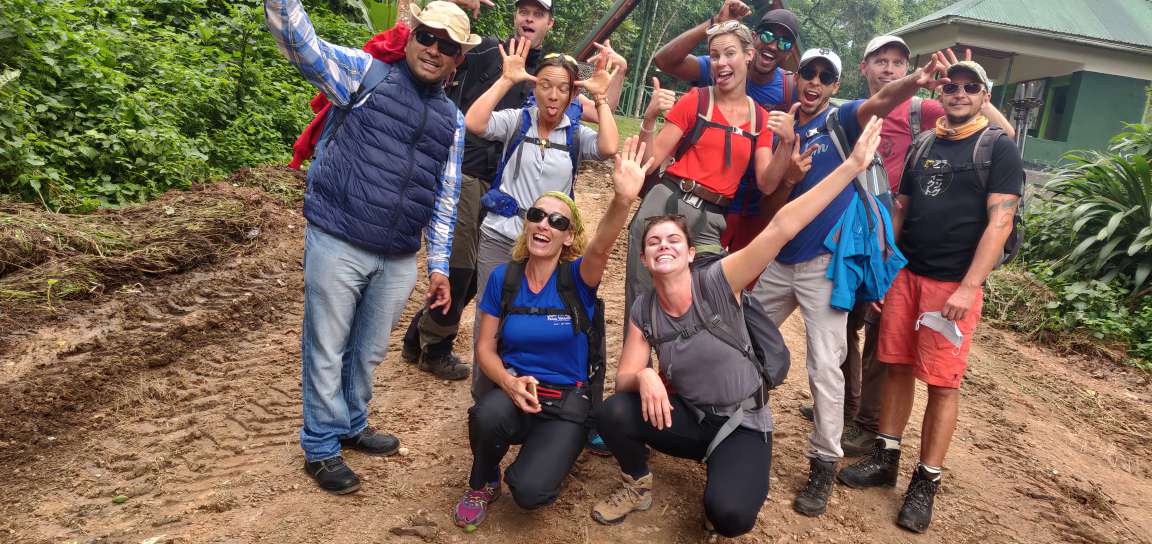
After the long COVID-19 pandemic lockdown, I got an opportunity to join 6 days hiking expenditure from Kampala to Rwenzori Mountains National Park along with a  team of 10 tourists from 8 different counties (Nepal, United Kingdom, the Netherlands, France, San Salvador, Germany, and Belgium). 

The Rwenzori Mountains National Park is located at Rwenzori Mountain in Ugandan  and is recoznized as UNESCO World Heritage Site. Having an area of 1,000 km2 (386 sq mi),  the park has many other touristic plase such as Africa's third highest mountain peak, waterfallslakes, and glaciers. The park is known for its beautiful plant life. The highest peak of the Ruwenzori is 5,109 meters (16,762 ft) high, and the range's upper regions are permanently snow-capped and glaciated. Rivers fed by mountain streams form one of the sources of the Nile (Wikipedia).  

The 4 days hiking trip were managed by Rwenzori Mountaineering Services (RMS) and Ruboni Community Camp (RCC), which is situated at the gateway of the Rwenzori Mountains National Park. The RCC is fully owned and run by the community, where all profits go to the local community. RMS/RCC provided tour guides, porters, chefs, and medical nurses which includes a total of 32 support members from the community. The participation of the local community in tourism management is an important aspect of building ownership and to contribute towards tourism sustainability. My professional eyes heading to some simple observation and my own analytical lean go to community mobilization, employment, economic impact, contribution to the livelihood, and community ownerships. Well, I paid $473 for my tour service apart from other expenses for 4 days in the park. Tentatively, I cross-checked, how it was distributed in different connections and services provided at the local level. The above calculation is based on my informal information and estimation. 

I am from Nepal, a country of Himalayas and the birthplace of Lord Buddha, where several such national parks and touristic destinations are located. I visited a few of them such as, Khaptad national park, Bardiya National Park, Sauraha National Park, and Suklaphat National Park. I was not much aware of the relationship between local people and wildlife authority I mean at a micro-level benefits sharing mechanism. However, I was a witness of such a wonderful resource sharing relationship between community and wildlife. Apparently, as a tourist and as an observer,  I have dared to capture some notes:
  • Community participation, ownership, awareness, and adoptive relationship with Uganda Wildlife Authority (WUA), Rwenzori Mountains National Park. I.e. use of different resources, maintenance, and waste management, and cleaning.
  • Local-level employment creation (average $4.17/day excluding tips and RCC profit) – a minimum of around 100 days/year employment in normal time. Community-level benefits from wildlife – around 120 train tour guides, 1500 porters, 40 cafes are directly involved with the local community. Additional involvement from local level – professional chefs and medical nurses.
  • Participation of local-level service providers both community based and entrepreneurs, we paid our entry fee through a service provider and all tour coordination through local-level institutions called Rwenzori Mountaineering Services (RMS). 


Thank you Adrian Ouvry, Jan Bakker, and all team members for making a memorable and joyful trip.
 Chiranjibi, 27 July 2020

Tuesday, June 23, 2020

Agriculture Seed and Tools through a voucher - Market Fair


Agriculture seed and tools through voucher modality organized a market fair in West Nile in Uganda.  Uganda Red Cross Society (URCS) supported 1300 Households with a population of 6500 people in Bidibidi and Palorinya refugee settlements, including host communities to manage the access of agriculture seeds for food security and livelihoods. A voucher was worth 98,500 UGX ($27), it was included commodities cereal crops and value vouchers allowed to access different seeds and tools for their own crop production. As a long term perspective, targeted beneficiaries could grow their one food in their garden becoming more resilient for food security.

In Uganda, farmers are using three cropping seasons, which URCS is giving of time of 2nd Season (July-September) planting seeds with this voucher modality. Due to the COVID-19, not as usual operations in refugee settlements, the Government of Uganda’s directives SOP focusing on all the readiness of CIVID-19 risk communication included with this operation. Since targeted 1300 households could not gather in one place, URCS was considered an innovative approach for COVID adaptation before the seed vouchers redeem in the market for.

 
URCS adopted, Community Engagement and Accountability (CEA) approaches for all the process of choosing crops, varieties and community sensitization through the mobilization of Red Cross volunteers in the respective groups. Refugees and host communities used this project supported voucher by the local vendors in the market fair to get their choice to buy the seeds, and it gave them a chance to access a variety of seeds at their convenience and respecting beneficiaries accountability, dignity by promoting CEA approaches.

Karibu, Chiranjibi, West Nile, Uganda
Media update: https://youtu.be/AcCyYEEHiK0


Wednesday, April 25, 2018

RCRC Mission, Experience, Learning, and Life – in the Middle East


As an official mission with the French Red Cross (FRC) in Iraqi Kurdistan, a new country has been added into my list, with an expectation of new learnings and experiences that I’d be gathering from this new venture. This is my 1st mission in the Middle East. 1St November 2017 is the day I joined the new job as Project Manager with FRC followed by orientation in the FRC HQs Paris, France. After an official orientation in 2nd week of November, I then directly flew to Duhok city. It was a great deal in my mind, “… Chiranjibi you're going to Iraq” “war… conflict….. new role…..new  lifestyle…” !!, Oho, “yes”, when I arrived the destination in Duhok, I received a warm welcome by my FRC team in office guest house and in the office too, was observing the scene curiously “a Nepali professional”. I spent more than a decade of my professional career in Nepal and; around seven months in the African continent in Uganda. As a development professional, the only thing I want to see is happiness “on the faces of people”, I always try to reflect “my happiness in the context”.

Well, again Duhok, my six months, chilled weather, beautiful city, lovely people, amazing food; started my project work with a new team – it took some time to understand each other – different context, culture, the way of working, thinking and expression, and psychology. Yes, I have been working with the divers’ team and locations, which I believe since “respect and understanding” are the foremost catalyst of team spirit, which, I intimate with context and team and “got it”.
 

Personal life, apart from professional life, I met some Nepali friends who have been working with different organizations in Duhok – Tulshi Sharma, Parsanta Adhikari, Tulsi Nepal, Krishna Bahadur KC, and Ajay Upreti, definitely helped me realizing “Chiranjibi, you are not alone here!!” I have some remarkable memories as well: Food serving in the restaurants - “embedded free foods”, weather and nature: extreme cold Oct-March that I experienced. I am desperately waiting for the summer, the season of extreme hot May-August. Rocky and desert mountain around, now it’s becoming greenery
 
I have been involved in the Red Cross and Red Crescent movement activities responding to the Syrian crisis with the EU Regional Trust Fund “MADAD” a consortium project in outside the camp area in Kurdistan region, leading the vocational training and small business creation such as skill-based livelihood intervention and market linkages, income-generating activities, and skills training package.

Finally, I have been granted this opportunity to learn and grow both professionally and personally. It’s an honor to be a part of the FRC team, friends, and supporters “thankful”.

Tamam, Chiranjibi

Tuesday, December 5, 2017

Dohuk Dam- in Iraqi Kurdistan, northern Iraq.

The Dohuk Dam is an earth-fill embankment dam on the Dohuk River just north of Dohuk in Dahuk Governorate, Iraq. The dam was completed in 1988 with the primary purpose of providing water for irrigation. It is 60 m (197 ft) tall and can withhold 52,000,000 m(42,157 acre·ft) of water. The dam has a bell-mouth spillway with a maximum discharge of 81 m3/s (2,860 cu ft/s).https://en.wikipedia.org


Wednesday, November 1, 2017

Healthy Garden Healthy Home (HGHH)

Healthy Garden Healthy Home
Healthy Garden Healthy Home (HGHH) is a system of farming around household premises which satisfies the family nutrition and food requirements to some extent. The main feature of HGHH, it is situated around household area and sustains family for its food and nutrition requirement as well as supports in income generation activity for family. HGHH provides vegetables, fruits, spices and fish required for a family while it also conserves herbs and flowers that have aesthetic and religious value. Garden utilizes the land available near to house and grows various species of plants useful for fulfilling family requirements. It also conserves biodiversity by retaining various useful species and helps to maintain biological diversity around household. Health garden provides opportunity for income generation as well as saves money for buying daily vegetables and fruits.

Family Nutritional Security
Nutrition refers to the food required by a person to live a healthy life. It is required for growth and development of cells, tissues or required for repairment of damaged cells and production of energy required for the body of a human being. Family members should consume all the nutritional food required for their healthy living. Basically, nutrition is divided in five major types  and these are; carbohydrates, proteins, vitamins, fats, minerals and water. Carbohydrates provide energy required for the body; proteins build up the tissues and organs; vitamins supports in growth and development of cells, tissues and body; fats protects heart, liver and lungs; minerals help in growth of muscles and water regulates temperature of body. Therefore, it is quite necessary to consume foods that provide the essential nutrition for growth and development of body. Foods such as cereals, pulses, green vegetables, meat and eggs when consumed during meals and dinners provide all the essential nutrition. Combination of foods that provide the entire nutrient necessary for human growth and development is called balanced diet.

Features of Health gardens
Healthy garden establishment includes better planning including its layout of the various components like compost, water sources, vegetable areas, fruits plantation regions etc. Better planning of home garden allows utilizing spaces and resources. Healthy garden has its specific plots. It is established to fulfill the nutritional requirement of the family. It is required to plan for various crops to be grown in the garden. Separate areas are allocated for vegetables with various types of growing habbits and season. This is required to utilize the sunlight, moisture, soil nutrition and spaces. Healthy garden has some major features, these are:
-          is around household vicinity
-          produces year round crops
-          utilizes local available inputs
-           helps in food diversity and bio-diversity
-           ensures family nutrition security
-           promotes integrated crop production

Vegetable gardening is a major component of healthy garden. It is an allocated area inside a garden where seasonal as well as off-seasonal vegetables are produced. It is experienced that for a five-membered family at least 200 square meters’ vegetable garden is required. Vegetable garden provides daily vegetables for a family in a year-round basis. Therefore, it is taken as most important part within healthy garden. It provides opportunity to cultivate year round crops and also supports for income generation by selling surplus produce in nearby market.

Action Research and Field Implementation
DCA is starting the concept with 700 families in Gorkha and Dhading districts and plans to scale up from the learning. In between we will need to do a lot, prepare ourselves, and come up with clear implementation guideline. We are thankful to DCA and our partners for their hard work thus enabling us to live up the “health home healthy garden”.

The agriculture and livestock activities around the homestead is ensured by the technical and trained staff. They provide technical training and support on the appropriate agriculture and livestock inputs. This may vary from the drought resistant seed varieties to latest breeding bucks. Homestead refers to the home and the immediate surrounding land used by the family. Many small plot production activities happen at this level including vegetable and fruit production or household fish farming. Most of the poor people spend a very high proportion of their income on food as they do not have enough land to produce food for all  their needs. They grow some produce on small plots of land around their homestead or on common property resources or common lands. Homestead plots are easily developed under individual initiative. Growing vegetables within the homestead is also more convenient and secure.

Additionally, the disaster risk reduction is mainstreamed into the concept by preparation of disaster risk management plans undertaken through identification of hazards and vulnerabilities. Ensuring that people have access to safe water, water safety plans are embedded into each water supply systems. Water safety plan is a management tool for securing drinking-water safety from water source to point of use through continuous monitoring and preventive maintenance of water supply systems. For further reinforcing resilience of the community, technical advice will be facilitated for agriculture and livestock insurance. Given the high acceptance of the community on livestock insurance, DCA has planned to expand insurance schemes to water supply systems. There are many water supply systems across the country that have been damaged due to natural disaster such as landslides and flood or pipeline damaged during road development in the rural areas. The insurance of these systems would be helpful for the communities when major repairs are required. The premium for the insurance can be paid through the routine monthly water tariff collected by the users committee. 

For more : Chiranjibi Rijal, csrijal@gmail.com
                  Cecial Adhikari, cecial.adhikari@gmail.com